You’ve found a glamping deal that looks amazing, but now you’re stuck on the big question: yurt vs safari tent vs cabin — which one actually fits your budget, the season you’re traveling, and how much comfort you really need? They all promise a cozy night under canvas or timber, yet the experience (and the price tag) can be surprisingly different.
This guide breaks down what each stay actually is, how the comfort and amenities compare, and what you’ll really pay per night. We’ll also cover which option works best in which season, how many guests each one sleeps comfortably, and how to book the right glamping stay without overpaying. By the end, you’ll know exactly which of the three suits your trip — and your wallet.
What Each Glamping Stay Actually Is
Glamping listings often blur these three stay types together, so it helps to know exactly what you’re clicking “book” on. Each one started life very differently, and those origins still shape the experience today.
The yurt
A yurt is a circular canvas structure set on a wooden platform. The design comes from Central Asian nomadic dwellings, where portable round tents were used for centuries on the steppe. Modern glamping yurts keep that distinctive round shape and domed roof, but add wooden floors, a lockable door and usually real furniture inside. The circular layout means there are no corners, which some travelers find cozy and others find slightly disorienting at first.
The safari tent
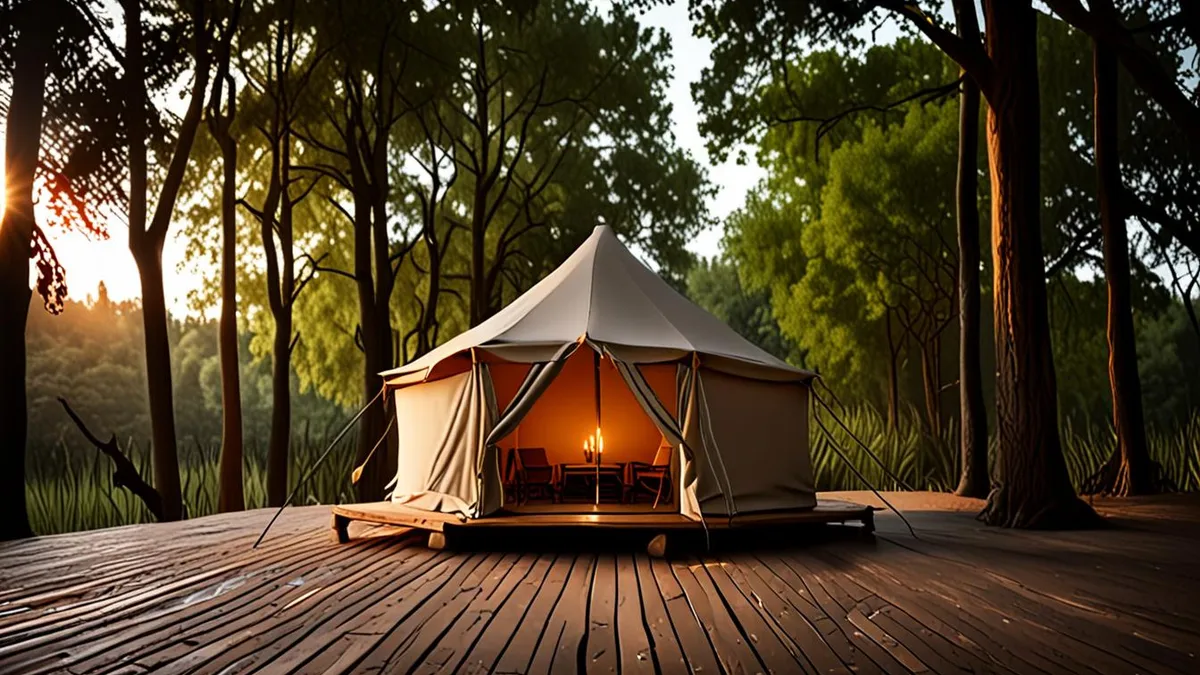
A safari tent is a large canvas tent pitched on a raised wooden deck. The style is inspired by African safari camps, where canvas tents let guests sleep close to wildlife without giving up a proper bed. In a glamping setting, these tents are often roomy enough to stand upright and walk around in, with zippered canvas doors and mesh windows for airflow.
The cabin
A cabin is a solid wood structure with real walls, windows and often a kitchenette. Unlike the two canvas options, a cabin is essentially a small house: it has a roof that doesn’t flap in the wind, solid doors that lock, and insulation between you and the weather. Many cabins also include electricity, lighting and heating as standard rather than as upgrades.
Comfort and Amenities Compared
Comfort is where these three stay types really separate. A cabin offers the most comfort of the three: heating, real beds, kitchens and private bathrooms are common. You get solid walls that block wind and noise, windows you can open or close freely, and a bathroom steps from your bed rather than across a field.
Yurts usually have beds and a stove inside, but they often share bathroom blocks with other guests. That means a nighttime trip outdoors in your slippers, which is fine in dry summer weather and less fun in the rain. The wood stove is a genuine plus though, as it keeps a yurt surprisingly warm once you learn to feed it.
Safari tents feel the closest to nature, with canvas walls that let you hear every bird, breeze and rain shower. Upscale sites often include en-suite bathrooms, but canvas has no sound insulation, so a neighboring group’s late-night conversation will sound like it’s in your room.
- Cabin kitchenette: many cabins include a small fridge, stovetop and basic cookware, so you can cook breakfast without leaving your stay.
- Yurt stove: a wood-burning stove usually needs lighting by hand, so ask the host whether they pre-light it for evening arrivals in colder months.
- Safari tent airflow: mesh window panels keep insects out while letting air move through, which matters in warm weather when canvas heats up fast in the sun.
- Shared bathroom blocks: at many canvas sites, showers and toilets sit in a separate building, so pack flip-flops and a headlamp for nighttime trips.
Price: What You’ll Really Pay
Prices vary by stay type, location and season, but there’s a clear pattern worth knowing before you book. Yurts are usually the cheapest option, typically costing $100–$250 per night. Their simpler setup and shared facilities keep rates down, making them a solid pick for budget travelers who still want a real bed and a memorable night’s sleep. If you’re traveling solo or as a couple, the math often works out better than a basic hotel room in the same area.
Safari tents typically run $150–$350 per night in high season, and luxury sites with en-suite bathrooms, furnished decks and premium locations can exceed that range. You’re paying for atmosphere and space as much as for amenities, so think about which extras actually matter to you before splurging.
Cabins typically cost $120–$300 per night, sitting in the middle on price but offering the most built-in value. Because many cabins include a kitchenette, you can save real money by self-catering instead of eating every meal at nearby restaurants or park cafés. Over a week-long trip, those savings can add up to the cost of an extra night.
- High-season premiums: safari tent rates at the top of the range usually apply to peak summer weekends and holiday periods, so shoulder-season dates often cost noticeably less.
- Self-catering savings: a cabin with a kitchenette lets you cook dinners and pack lunches, which can offset a higher nightly rate over a multi-night stay.
- Location premiums: yurts and safari tents inside or next to popular national parks and coastlines command higher rates than identical setups an hour inland, so compare a few nearby areas before booking.
- What’s included: some canvas stays charge extra for linens, firewood or cleaning, so check the listing’s fine print before comparing nightly rates across stay types.
Season and Weather Suitability
Weather is the factor that separates a magical glamping trip from a miserable one, and the three stay types handle it very differently. Canvas is wonderful in dry, mild conditions but struggles once the temperature drops or the rain sets in for days.
Safari tents are the most seasonal option. In temperate climates they typically operate from April to October, because canvas walls let cold seep in and can leak or feel clammy during heavy, prolonged rain. If you want that breezy, close-to-nature feeling, plan your trip for the warmer months and pack layers for cool evenings anyway.
Yurts are the surprise performers here. Their circular shape, thick felt or canvas layers and central wood stove insulate surprisingly well, and many sites keep them open year-round, including snowy winters. Waking up to a white landscape from a warm yurt is one of glamping’s best experiences.
Cabins are the all-weather choice. With solid walls, windows, insulation and proper heating, they work in every season and are the safest pick for winter or stormy trips.
- Wind matters as much as rain: canvas can flap and creak in strong gusts, so exposed clifftop or lakeside safari tent sites feel far less romantic in stormy weather.
- Ask about the wood stove: in a yurt, confirm whether the stove is lit for you on arrival or whether you need to fire it up yourself, which makes a real difference on a freezing first night.
- Shoulder season sweet spot: late spring and early fall often give you lower rates and quieter sites while conditions are still comfortable in a cabin or a well-insulated yurt.
- Condensation is normal in canvas: in humid or cold weather expect some dampness on tent walls in the morning, so avoid leaving gear touching the canvas overnight.
Group Size and Who Each Stay Suits
Before you fall in love with a photo, check how many people the stay actually sleeps. Glamping sites vary widely, and squeezing a family of six into a two-person yurt will ruin the romance fast.
Safari tents and yurts usually sleep 2–5 guests. That makes them ideal for couples looking for something special, or for small families with one or two kids sharing the space. Most layouts center around one large bed, with extra floor mattresses or a small sofa bed for additional guests, so privacy is limited.
Cabins often sleep 4–8 people, usually across a proper bedroom plus a loft or sofa bed. This makes them the natural pick for groups of friends or two families traveling together, especially since splitting the nightly rate between several couples often makes a cabin cheaper per person than any tent option.
Then there is the feel of each stay. A yurt delivers a genuinely novel experience most guests have never had. A safari tent immerses you in nature, with canvas thin enough to hear birds and rain. A cabin gives you privacy, solid walls and space to spread out.
- Check bed configurations, not just capacity: a yurt sleeping five may mean one queen bed plus four single mattresses on the floor, which works for kids but not for a group of adult friends.
- Cabins suit longer stays: with more space, storage and usually a kitchenette, cabins are easier to live in for a week than a single circular room.
- Babies and toddlers favor solid walls: naps survive better in a cabin, where noise from neighboring guests and early morning birdsong are muffled.
- Multi-yurt sites work for groups too: if your party is bigger than eight, booking two yurts or safari tents side by side on the same platform area can beat one large cabin.
How to Book the Right Glamping Stay
Glamping has grown fast, and the best sites at popular destinations now sell out well before summer. A little planning makes the difference between scoring the exact stay you want and settling for whatever is left. The good news is that glamping bookings follow predictable patterns, so a few simple habits will put you ahead of most other travelers. Here is how to approach booking.
- Book cabins 3–6 months ahead for summer weekends. Cabins are the most in-demand stay type and sell out fastest, especially for July and August weekends near national parks or lakes. If your dates are fixed, treat booking like a flight reservation and get in early. Set a calendar reminder for the moment your desired dates open up, and book the moment they do rather than waiting to compare a few more options.
- Check whether bathrooms are private or shared before booking canvas stays. Many yurt and safari tent sites use shared bathroom blocks rather than en-suite facilities. If walking to a bathhouse at midnight does not appeal to you, filter for listings that state “private bathroom” or “en-suite” explicitly, and email the site if it is unclear. Ask how far the bathhouse is from your unit, too, since a two-minute walk feels very different in the rain.
- Filter for heating or wood stoves if traveling outside the April–October safari tent season. Canvas stays that operate in cooler months usually list a wood stove or heater as a feature. If heating is not mentioned, assume the tent is fair-weather only and choose a yurt or cabin instead.
- Read recent reviews for weather-related comments. Guests often mention leaks, drafts or how warm a yurt stayed in winter, which tells you more than any listing description. Pay attention to reviews from the same season you plan to visit, since a glowing summer review says little about a January stay.
One last tip: flexibility pays off. If you can travel midweek or in shoulder season, availability opens up dramatically and rates often drop. And if a site is fully booked, ask about cancellations, since popular glamping spots frequently have last-minute openings. Joining a site’s mailing list or following it on social media can also alert you to cancellations and newly added units before they appear on booking platforms.
Picking Your Perfect Glamping Stay
So which one fits your trip? Yurts win on price and winter availability, with nightly rates typically from $100–$250 and many open even in snowy months. Safari tents win on atmosphere, especially from April to October, when canvas walls and a raised deck put you right in the middle of nature. Cabins win on comfort and group size, sleeping four to eight with real walls, heating and often a kitchen.
Match your choice to the season you’re traveling, your budget, and how much roughing it you genuinely enjoy. Get those three things right and any of the three stays can be a great trip. If you’ve stayed in a yurt, safari tent or cabin lately, tell us how it went in the comments or share this article with a friend who’s planning a glamping getaway.